Complex products should still feel simple.
We design experiences that make complex products easier to understand, use and grow, from the first user interview to production-ready screens your engineers can build with confidence.
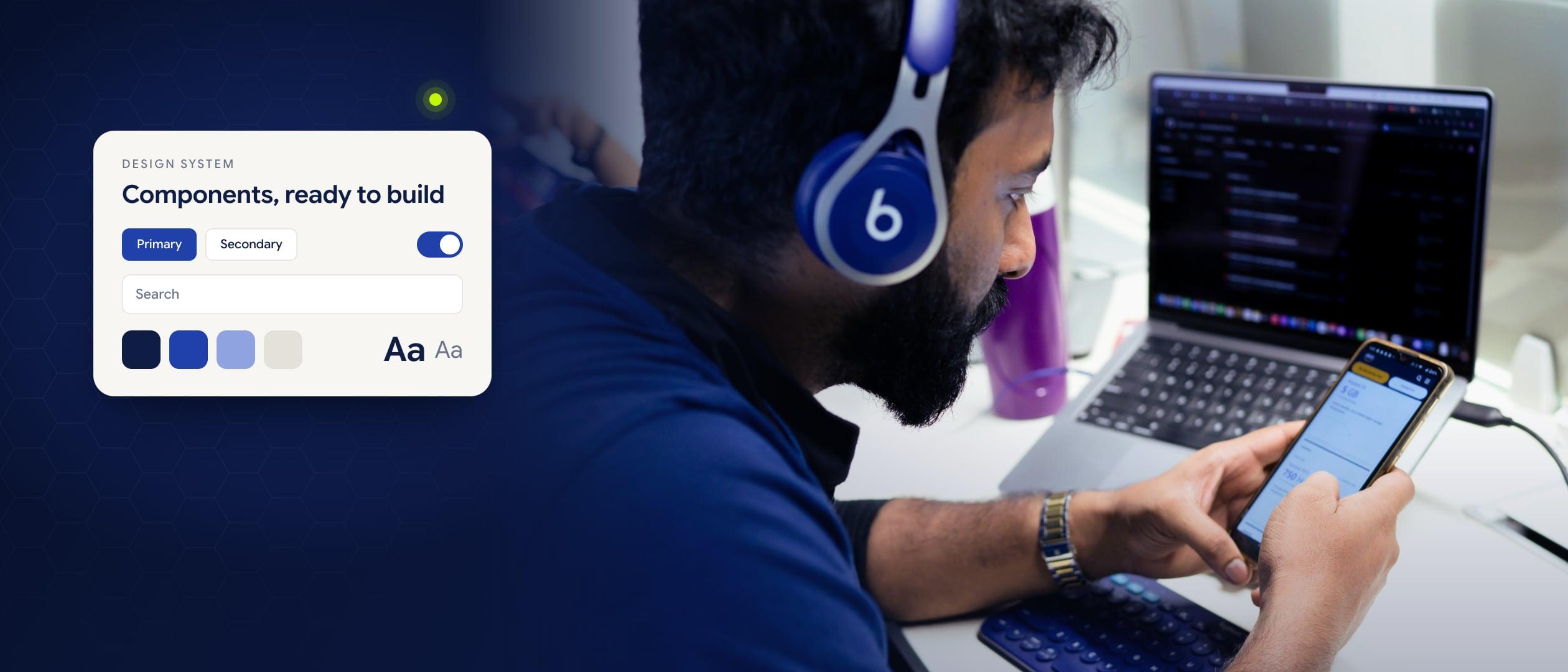
Overview
Design is how the product works, not how it's decorated.
People don't judge a product by its features. They judge it by how easy it is to get something done. Our design team works alongside product and engineering from day one, researching, prototyping and testing until the experience earns its simplicity. The result is a product people don't need a manual for, built on a design system that keeps it consistent as it grows.
- What it solves
- You need to turn complex workflows or an early product into an experience people can understand and use. That might be a new product, a dense dashboard or enterprise tool that users struggle with, or a product whose design has become inconsistent as features were added. Design brings back clarity and consistency.
- What we do
- We design alongside product and engineering so the experience and the technology evolve together. Our designers work with the engineers who will build the product, so every screen is grounded in what is technically possible, and every technical decision considers the person using it.
- What you get
- UX research, user journeys, UI design, interactive prototypes, a design system and production-ready specifications. That's everything your team needs to build the product the way it was designed.
What you get
Six outputs. From insight to interface.
Research findings
Evidence about who your users are, what they need and where they struggle. We use interviews, usability reviews of existing products and competitor analysis, and summarise the insights and opportunities clearly. Design decisions are based on evidence, not opinion.
Journeys
Maps of how each type of user moves through the product, from first contact to their goal, with the friction points marked. Journeys and flows define the structure of the experience before any screen is designed. That's where complex workflows become simple.
UI
High-fidelity interface design across every screen and state, for web, iOS, Android and beyond. That includes visual design, interaction design and motion, on brand and accessible. The interface looks good because it works well, not the other way round.
Tested prototypes
Clickable prototypes that look and behave like the real product, tested with real users before development begins. Problems found in a prototype cost hours to fix. The same problems found after launch cost weeks.
Design-system components
A reusable library of components, patterns, typography, colour and spacing rules, documented for designers and developers alike. Your product stays consistent as it grows, new features ship faster, and your team builds from shared parts instead of starting from scratch.
Production-ready specifications
Annotated designs with every state, edge case, interaction and responsive behaviour defined, handed over in the tools your engineers already use. There's no guesswork during development and no "that's not what we designed" at launch.
Our approach
Four steps to an experience that earns its simplicity.
- Step 01
Understand
We start with the people and the problem. Through stakeholder workshops, user research and a review of any existing product, we learn who uses it, what they're trying to achieve and where today's experience gets in their way. We agree the goals and how we'll measure success.
- Step 02
Explore
We map journeys and information architecture, then explore several directions through wireframes and early concepts. Ideas are cheap at this stage, so we test widely and quickly before narrowing down to the approach that best serves users and the business.
- Step 03
Prototype
We turn the chosen direction into interactive prototypes and test them with real users. Engineers review them alongside us to confirm feasibility. What works stays, what confuses gets reworked, and nothing reaches development untested.
- Step 04
Refine
We finish the visual design, build out the design system, check accessibility and prepare production-ready specifications. During development we stay involved, reviewing builds and refining details, so the shipped product matches the design.
Design craft
Ten disciplines. One design team.
Product design covers much more than how screens look. Our team covers the full range, so you don't need to manage multiple specialists:
- Research
- Understanding users, their context and their needs.
- Experience strategy
- Deciding what the experience must achieve.
- Wireframes
- Structure and flow before visuals.
- Prototypes
- Clickable, testable, realistic.
- Design systems
- Reusable components and documented rules.
- Interaction design
- How every element responds.
- Visual design
- Brand, colour, type and layout.
- Motion
- Animation that guides, not decorates.
- Accessibility
- Experiences usable by everyone.
- Usability testing
- Proof the design works, before it's built.
Who it's for
For products that need to feel effortless.
Founders launching a new product
First impressions decide adoption. We design a first release that feels considered and trustworthy from day one, and is focused enough to ship quickly.
Teams with complex workflows
Dashboards, admin systems, booking platforms, B2B tools and internal systems are often packed with capability but hard to use. We untangle the complexity so users get their work done faster with fewer mistakes.
Products that have grown inconsistent
Years of features added by different hands leave a product that feels disjointed. We audit, redesign and put a design system in place so it feels like one product again.
Teams that need design capacity
If you have engineers but no design team, or a design team that needs more senior support, we can work as your embedded design partner, project by project or month to month.
Where it fits
Discover · Design · Build · Scale
Every engagement can move through four stages: Discover, Design, Build and Scale. Product design covers two of them. In Discover we research users and define the experience strategy. In Design we shape journeys, interfaces, prototypes and the design system. Because the same team carries the work into engineering, the designs ship as intended, with no handoffs or restarts.
- 01Discover (this service)
- 02Design (this service)
- 03Build
- 04Scale
Why Codezyng
Design that has been recognised at the highest level.
Codezyng is a design-led product engineering studio, founder-led since 2019. Design leads the work rather than being added at the end. Our team has contributed to products recognised among Apple's best-designed apps as an Apple Design Award finalist. We've designed for platforms from iPhone, Apple Watch, Apple TV and Apple Vision Pro to Roku, web dashboards and Shopify storefronts, and our clients have been chosen to showcase their product to Tim Cook. With 50+ designers and engineers working for 35+ clients across 12 industries, we know how good design performs once it's built and in front of real users.
Exceptional design
Experiences people don't need a manual for.
Designers and engineers together
Every design is reviewed by the people who will build it, so it ships as intended.
Tested, not assumed
We validate with real users before development, not after launch.
Built to scale
Design systems keep your product consistent as features and teams grow.
Ways to work with us
Start small. Grow as trust does.
Product design can be a standalone engagement or the first step into development. Choose the model that fits:
A fixed-scope project for a defined redesign or new product
A design subscription for senior design on tap, month to month
A dedicated team for multi-year builds
A product partnership with a shared roadmap and shared risk
Questions
What buyers ask
Get started
Let's build what's next.
Have a product that should feel simpler, or an idea that deserves a great first impression? Tell us what you're trying to achieve, and we'll start by understanding the people who will use it.